
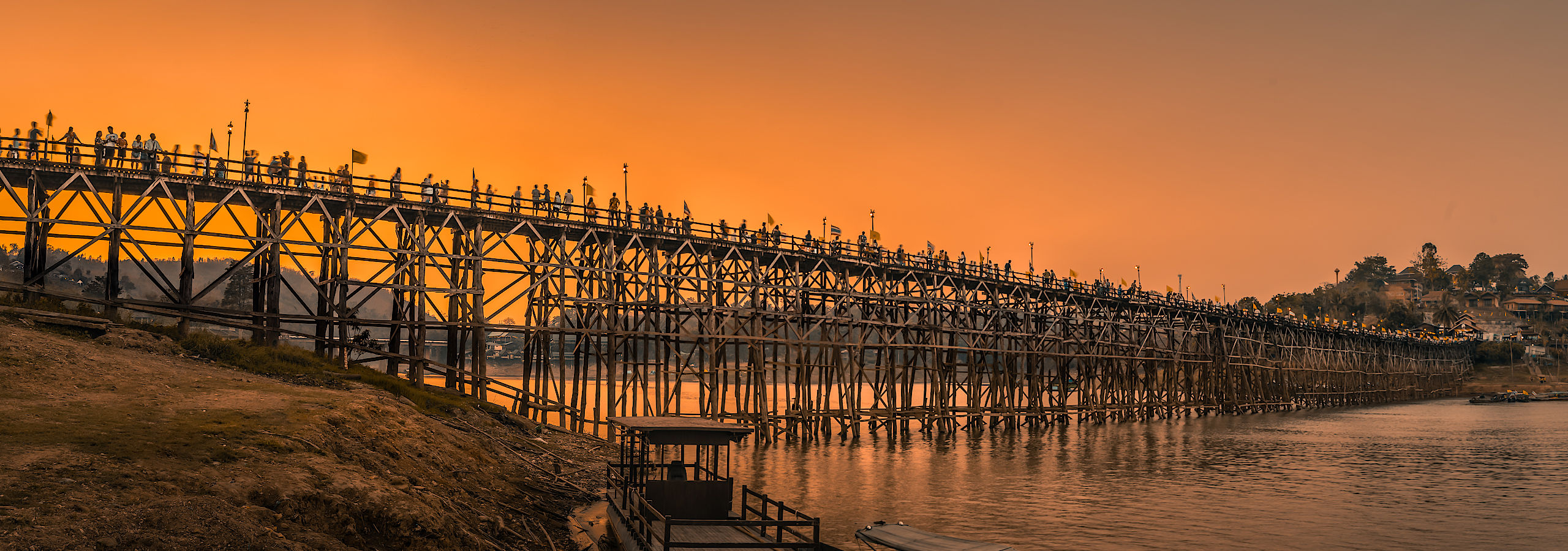
SAPHAN MON BRIDGE
Saphan Mon Bridge in Kanchanaburi: The Complete Visitor's Guide
Locally called Saphan Mon (officially the Uttamanusorn Bridge), it links the small lakeside town of Sangkhla Buri with Wang Ka, a Mon village on the far bank. Thousands of weathered planks that make up the bridge and a lake that shifts from mist to a shimmering gold at dawn make it one of the most photogenic and atmospheric spots in western Thailand. It is still a working bridge, so you will share it with monks, schoolchildren and villagers going about their day.
Its claim to fame is to be Thailand's longest hand made wooden bridge, often called the world's second longest after U Bein in Myanmar.
Some of the best things to see is the dawn alms-giving, when monks collect food from villagers lining the Mon side of the bridge. There is also the local markets and Mon food to enjoy. Taking a boat ride around the lake and out to the sunken temple is another highlight you won't want to miss.
There is a bit of interesting history behind this bridge. Built between 1986 and 1987 by Mon refugees under the guidance of the revered monk Luang Pho Uttama, the bridge reconnected the two halves of Sangkhla Buri, which had been split apart after being flooded by the Khao Laem dam.
In 2013 after three days of heavy rain, flood water debris collapsed a large part of the bridge. It was re-opened in 2014 after repairs by army engineers.
It's still maintained by the local community. Entry to the bridge is free , but you can make an optional donation for it's upkeep.
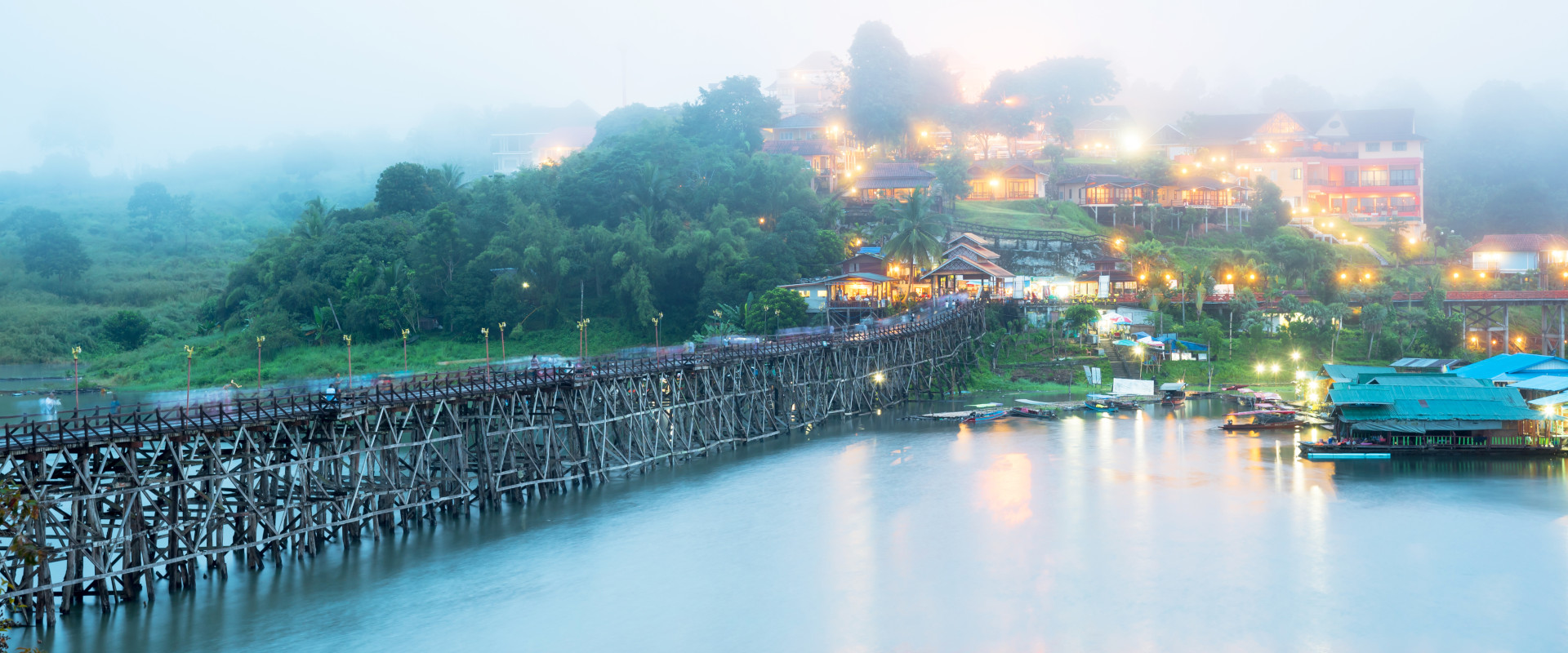
How to explore Saphon Mon Bridge
The best way is on foot, and at different times of day.
Dawn is between 05:45am and 07:30am, depending on the time of year. Cross to the Mon side at Wang Ka and join the alms-giving at around 06:00-06:30 as monks from Wat Wang Wiwekaram walk their round. You can buy a small alms set from stalls at the bridge entrance or through your guesthouse.
You can watch the mist lift off the lake afterwards. In the cool season, sunrise is roughly 06:20 to 06:40, so the round usually starts in pre-dawn light and the sun rises while villagers are still giving. Be in place by about 05:45am to 06:00am. Arriving later at 06:30 may mean catching only the tail end. Timing varies a little by day, and on Buddhist festival days alms are sometimes offered on the bridge itself, so check with your guesthouse the evening before and follow what the local do.
After alms giving you can walk the bridge and see how the timber piles and joints make up this hand made bridge. You can watch the daily life of monks, children heading to school, women balancing loads on their heads, and the fishermen below.
Underneath is also accessible. Walk down at either end for a ground-level view of the structure. If you wait until the late afternoon, the sun will be behind it which makes a great photo from the waters edge.
A second bridge runs parallel to the wooden one. This Red Bridge has views of the banks and the entire wooden span at sunrise.
Explore the Mon village during the day and continue along the lakeside road to Wat Wang Wiwekaram and the golden Buddhakhaya Chedi. It is roughly 1 to 2 km each way, so renting a bike or taking a songthaew is an option if you do not want to walk.
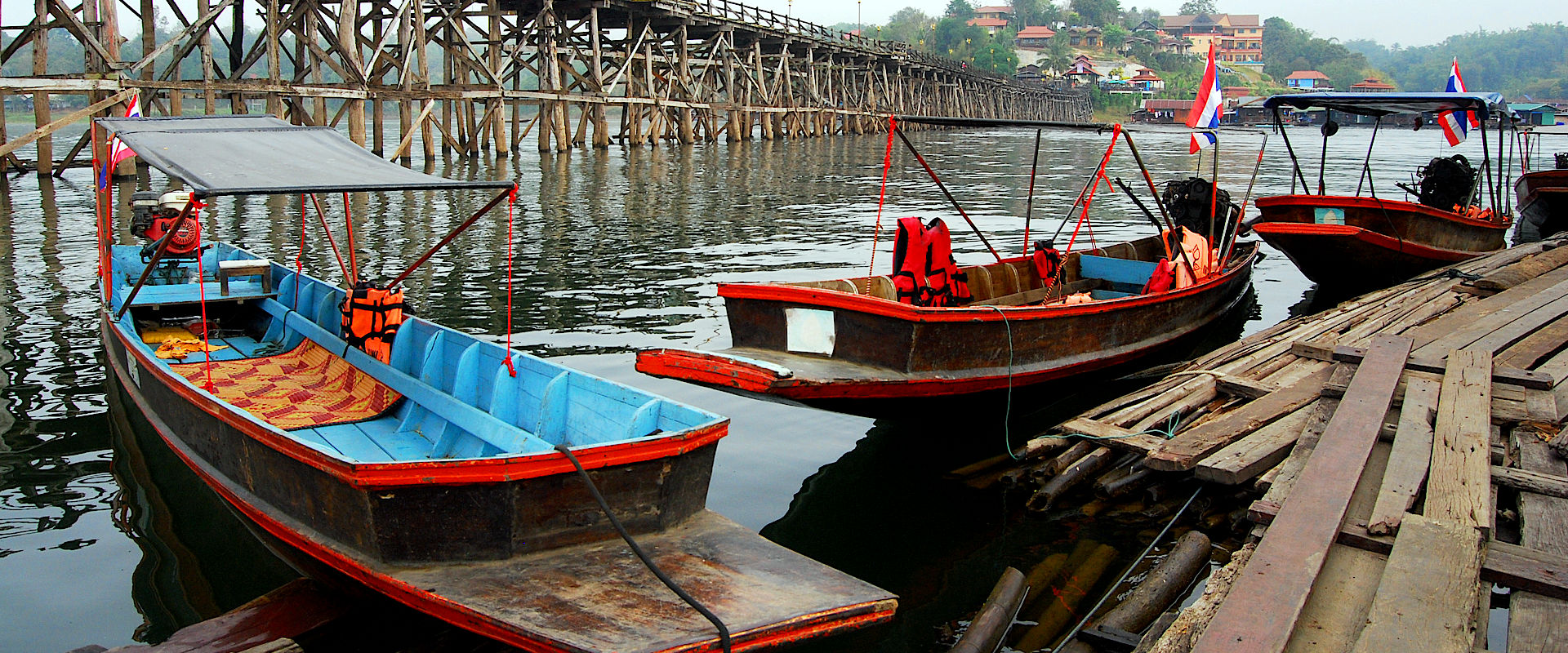
Taking a longtail boat ride out to the flooded Wat Sam Prasop is also an interesting adventure, but i suggest you check out a few different boat ride vendors prices first.
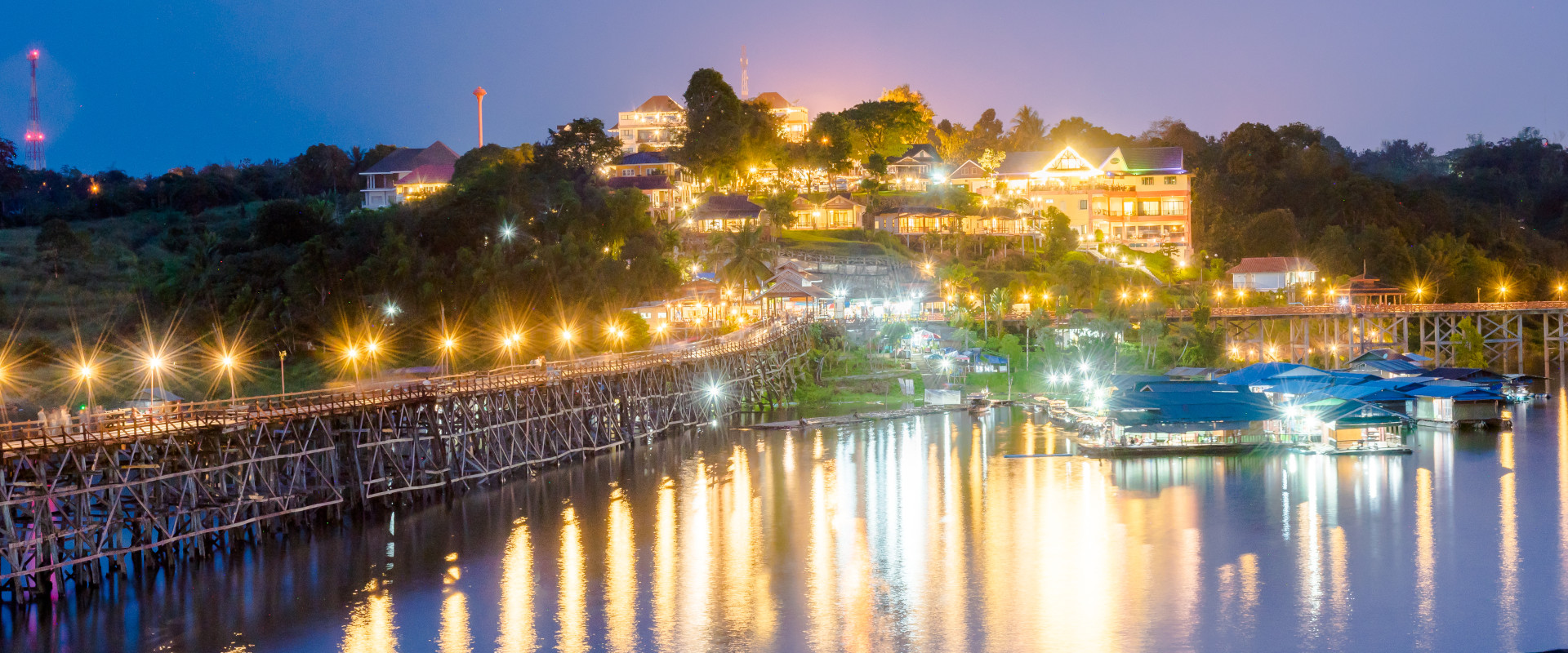
At sunset you could eat at one of the small restaurants at the start of the bridge on the Thai side and watch the light change over the lake.
Some stalls rent Mon-style costumes, including the alms set, for around 100 baht. This is some-thing you may like to do and take a few photos. Always ask before photographing people, particularly children and monks.
How Long To Visit Sangkhla Buri and Best Time To Visit
How long to spend at Sangkhla Buri
Allow 1 to 2 hours for the bridge and the Mon village, and plan at least one night in Sangkhla Buri to see everything.
A quick visit takes 2 hours. This gives you time to walk across, wander the Mon side, take photos from below, and have a drink at a lakeside cafe.
It's recommended you stay overnight. Arrive in the afternoon so you can watch the sunset from the bridge. Then return before dawn the next day for the morning mist, sun-rise and the alms round, then take a boat to the sunken temple and visit the temple and golden chedi.
For a more relaxed visit, stay 2 nights. You can then add Three Pagodas Pass, a waterfall and a motorbike tour around the lake onto your schedule.
A same-day return from Kanchanaburi city is possible only with a private driver and a very early start, since the journey alone is about 8 hours round trip. By public minivan it is not practical.
Best time to visit
The best months are November to February, when days are dry and mild (around 28°C) and dawn can be cool (around 14°C). Mist over the lake is most dramatic then.
November is when the lake is full and then it begins to drop.
Best time of day is sunrise for the mist and alms-giving, and golden hour before sunset for photos. Midday is hot and bright, it gets busier after the morning alms round.
What to wear
Dress for a mix of outdoor walking and temple visits with light, breathable and modest clothes.
Your shoulders and knees should be covered. This suits the alms round and Wat Wang Wiwekaram, where modest dress is expected.
Wear closed shoes or sturdy sandals with good tread. The bridge planks can be uneven and slippery when wet. You will be asked to remove shoes at temple buildings, so slip-ons are handy.
Mornings can be cool in the dry season, especially before dawn, so take a light jacket with you.
The sun is strong and bugs can be annoying, so wear a hat, sunglasses, sunscreen and insect repellent, especially around the lake at dusk.
Restrictions and etiquette
The Mon Bridge is pedestrian traffic only, so you will need to walk the distance.
Three Pagodas Pass is a Myanmar border crossing, and whether foreigners are permitted to cross can change. Bring your passport and check locally before you go.
Be aware that land-border crossings back into Thailand are usually provided with a 14 day stay only. So, check if this is currently enforced before crossing.
Ask before photographing people, especially children, monks and elders.
When entering temples, ensure you cover shoulders and knees, remove shoes before entering buildings, and keep your voice down.
Respect the alms round. Keep quiet, do not block the monks' path, and stay behind the line of villagers. Women should avoid touching monks or handing items directly to them, and should place offerings where directed.
Nearby attractions
Red Bridge is next to the Mon Bridge. This parallel bridge gives you a classic sunrise view of the wooden span.
Wat Wang Wiwekaram is about 1km. It's the spiritual centre of the Mon community and resting place of the revered monk Luang Pho Uttama. It has interesting multi-tiered Burmese-style roofs.
Buddhakhaya Chedi is about 1.5 km. This large golden Indian style chedi sits above the lake and has a small Burmese goods market nearby.
Wat Sam Prasop is the sunken temple ruins 2 km away. It's reached only by boat tour. These boat trips can also visit other submerged temples.
Takhian Thong Waterfall is located about 18 km from the town. This waterfall is best visited in or just after the wet season.
Three Pagodas Pass is 25 km away and takes about 40 minutes to drive. You will see Three small chedis on the Myanmar border, with a border market. Hourly songthaews run from the bus station for roughly 50 baht each way.
Where to Stay
Guesthouses and lake resorts cluster around the bridge and town. Popular places include Sripech Raft and Sripech Home (budget) and Siriboonsampao Resort (mid-range). Always book ahead to get a good deal as walk-in bookings can be more expensive.
Is parking available?
There is a car park near the entrance to the bridge, a small parking fee usually applies. Cafes and restaurants along the river may also let customers park, and many guesthouses in town include parking.
Arrive outside peak hours if you can because weekend mornings after the alms round and public holidays are the busiest and parking is at a premium. If you are staying within walking distance, leave the car at your accommodation and walk, the bridge itself is for pedestrians only.
How to get to Sangkhla Buri and Saphan Mon Bridge from Kanchanaburi
Buy your ticket at the bus station in Kanchanaburi city and ask for "Sangkhla Buri" (Sangkhlaburi). Minivans leave when full, so go early.
The final stretch is very steep and twisty. If you get carsick, take medication before you set off.
Getting back
Last departures to Kanchanaburi are in mid to late afternoon (listed vans leave from about 06:00 to 16:00, air-con buses mid-morning to mid-afternoon). Check the return times the day you arrive so you are not stranded.
See the interactive map below for exact location of Sangkhla Buri.
| Option | Fare (THB, one way) | Journey time |
|---|---|---|
| Air-con minivan | About 150-220 | 3.5 to 4.5 hours |
| Roughly hourly from about 07:00 to 17:00. Fastest public option. Fills up, and is cramped with bags. Luggage size restrictions can apply, so you may only be allowed one back-pack on your lap. | ||
| Air-con bus | About 180 | About 4 hours |
| Fewer departures than the vans. Very comfortable ride and larger luggage sizes allowed. | ||
| Local red bus (no air-con) | About 80-130 | 5 hours or more |
| Cheapest and slowest, with only a handful of departures. Stops at Thong Pha Phum. Hill climbs on older busses can be at a snails pace. | ||
| Private car with driver | Quoted per vehicle; agree the price first | 3.5 to 4 hours |
| Lets you stop at Hellfire Pass, Sai Yok and viewpoints on the way. Very comfortable and flexible ride, but most expensive. Your city accommodation can usually arrange. | ||
| Self-drive car | Rental plus fuel | 3.5 to 4 hours |
| About 215-225 km on a winding mountain road. Allow daylight for the curves. Read the Self Driving in Thailand article before choosing this option. | ||
| Motorbike | About 200-300 per day to rent | 4 to 5 hours riding |
| A scenic ride, but only for confident riders. Read the Self Driving in Thailand article before choosing this option. | ||


