
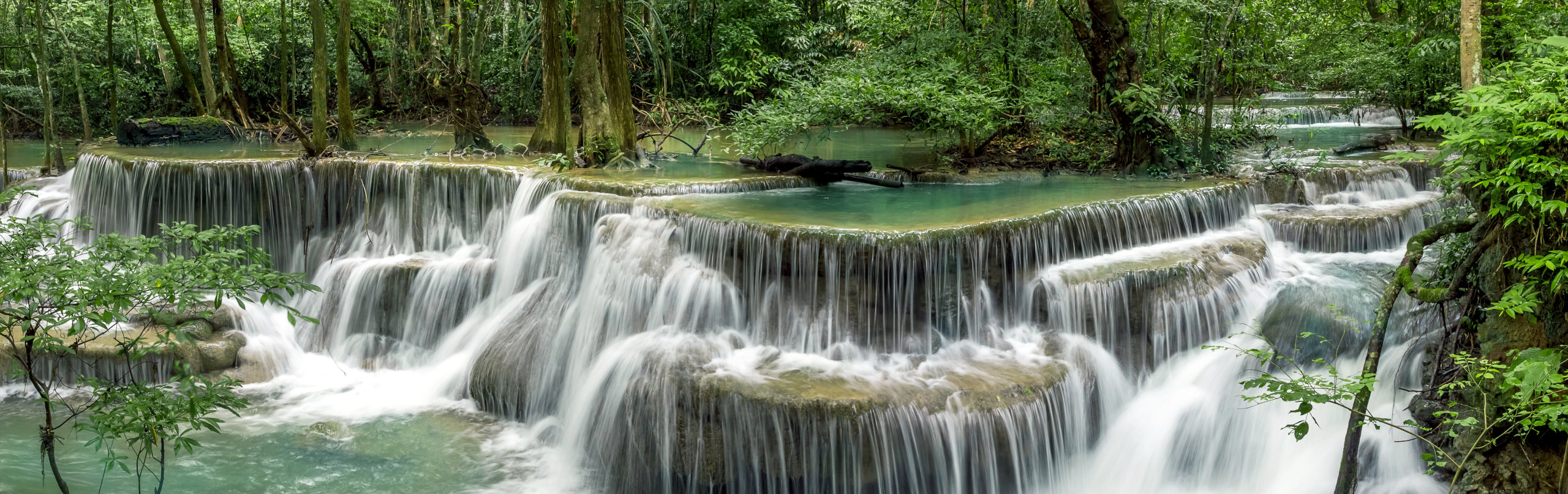
KANCHANABURI ATTRACTIONS
Kanchanaburi Travel Guide: 12 Top Attractions, Local Experiences, and How To Get There
Kanchanaburi will be one of your most memorable travel destinations. This province is famous for its dramatic wartime history, peaceful river scenery, waterfalls, national parks, caves, temples and mountain landscapes.
Located west of Bangkok, the city and province offer a very different experience from Thailand’s beach resorts and busy urban centres.
The main city of Kanchanaburi sits beside the River Kwai, surrounded by low hills, forests and quiet countryside. It is close enough to Bangkok for a day trip to see the main attractions, but would be a much better experience over two or three days.
You can explore the famous railway sites, visit waterfalls, take a boat trip, stay in a floating river raft hotel, and travel deeper into the province toward Sai Yok, Erawan or Hellfire Pass.
Best Places to Visit in Kanchanaburi
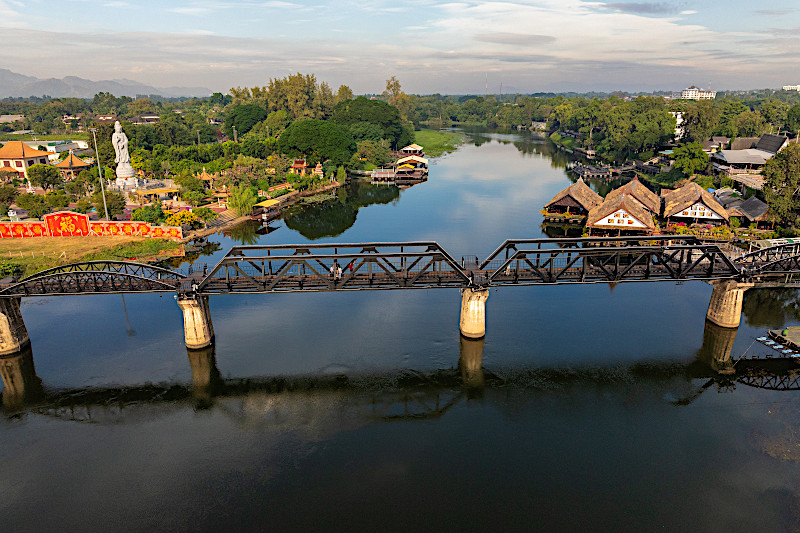
Bridge Over the River Kwai, Death Railway & Hellfire Pass
The Bridge Over the River Kwai, Death Railway and Hellfire Pass are some of Kanchanaburi’s most important historical attractions and is a very popular destination with tourists. These sites are closely linked to the construction of the Thailand-Burma Railway which was built under Japanese military control during the war.
The railway was constructed using the forced labour of Allied prisoners of war and large numbers of Asian civilian labourers. If you are interested in this type of history, then this is a visit you must see. Full day tours run from Bangkok which can take you to these attractions by mini-van, including a ride on the Death Railway section, and continue by road towards the west to Hellfire Pass. Sections of the original track still pass through the countryside and along steep river valleys, allowing you to experience part of the historic route by train. See the photos and details from the main article for more information and the tour map.
Huai Mae Khamin waterfall
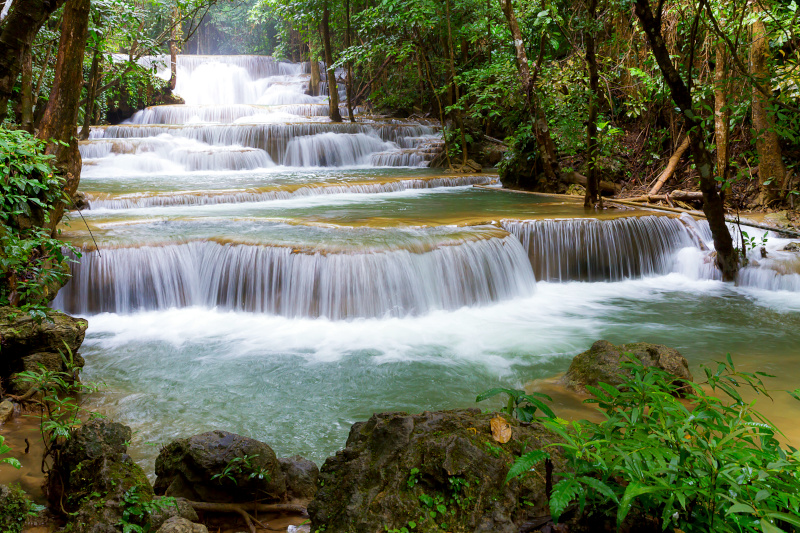
This is one of Kanchanaburi’s most beautiful natural attractions hidden within the forests of Khuean Srinagarindra National Park near the Srinagarindra Reservoir.
The waterfall is formed by water flowing over a series of limestone terraces, creating seven distinct levels, each with its own character.
You can follow a walking trail beside the stream to explore all seven levels, with the full route covering roughly 2.45 kilometres.
Accommodation and camping are also available within the national park if you who want to stay longer.
To get to this waterfall from Kanchanaburi city, drive north on Highway 3199 towards Srinagarind Dam and Si Sawat before continuing through the national park to Huai Mae Khamin Waterfall. The journey is around 110 km and takes approximately 2½ hours by car.
You could also visit Erawan Falls. It's around 45 km from Huai Mae Khamin Waterfall with the journey taking about one hour. Using private transport, you can combine both waterfalls in a full-day trip from Kanchanaburi.
Erawan National Park
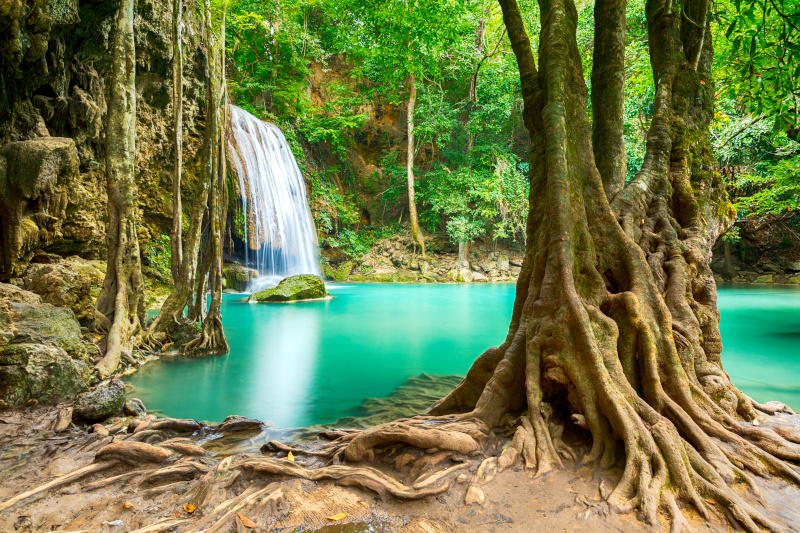
Erawan National Park is one of Kanchanaburi’s most popular natural attractions and best known for the spectacular Erawan Waterfall. It tumbles through the forest across seven separate levels, forming a series of limestone cascades and clear turquoise pools along a route stretching for around 1.5 kilometres. You can walk from the lower falls towards the upper levels and stop along the way for a swim and take photographs. The highest tier gives the waterfall its name because its shape is traditionally said to resemble Erawan, the three-headed elephant of Hindu mythology.
Within this park is Phra That Cave which contains large chambers with stalactites and stalagmites. Erawan Nature Trail provides a shorter walk through different types of forest and viewpoints away from the main waterfall path. If you are feeling adventurous then there is the longer Khao Hin Lan Pee Nature Trail. Camping areas and national park accommodation are also available if you would like to stay overnight.
Erawan National Park is about 65 km from Kanchanaburi city and is easily reached by road. From the city, follow Highway 3199 north towards Si Sawat and Srinagarind Dam. The journey takes around 1½ hours by car. Public buses also operate between Kanchanaburi and the Erawan area. Taking an organised tour would be less stressful if you want to combine the park with other nearby attractions. If you have your own transport, you could combine Erawan with Huai Mae Khamin Waterfall which is around an hour farther north by road. This makes it a full day waterfall trip through western Kanchanaburi.
Wat Tham Khao Noi and Wat Tham Suea
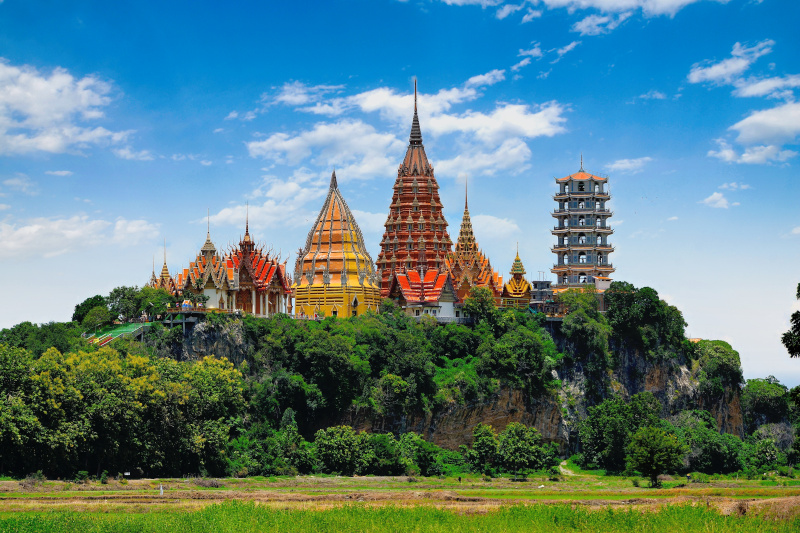
Wat Tham Khao Noi and Wat Tham Suea are located next to each other on a countryside hilltop southeast of Kanchanaburi city, giving you sweeping views across the surrounding fields towards mountains in the distance. Although they stand immediately beside one another, they are separate temples with different Buddhist traditions.
Wat Tham Khao Noi has a distinctive Chinese style pagoda and shrines reflecting its Vietnamese-Chinese Mahayana heritage. Wat Tham Suea has an enormous golden seated Buddha and an ornate Thai-style chedi reflecting its Theravada Buddhist heritage.
The main ascent is 157 steps, and the inclined lift may be out of service. Visiting could be a challenge, but the experience, especially the view from the top, is well worth the effort.
Sai Yok Lek Waterfall & National Park
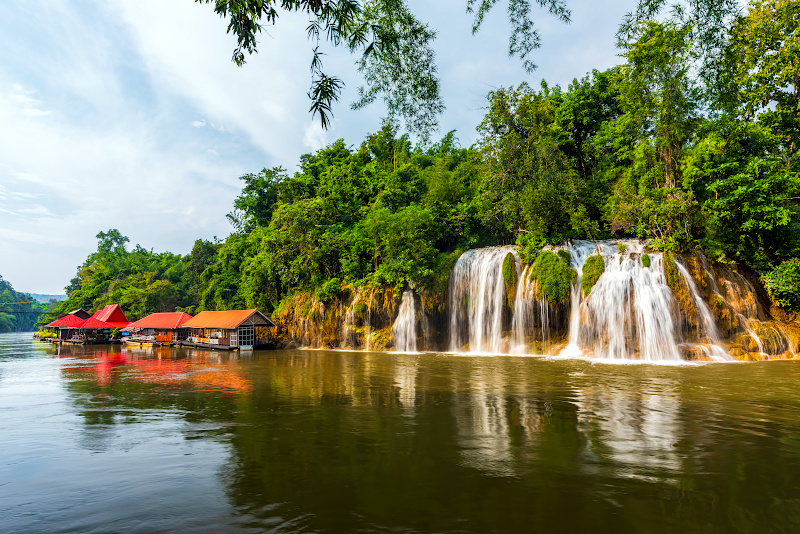
Sai Yok National Park and surrounding area in Kanchanaburi province offers a scenic mix of forested limestone hills, caves and waterfalls along the Khwae Noi River. Its best known sights include Sai Yok Yai and Sai Yok Lek waterfalls, which spill directly into the river beside floating raft houses and wooded banks.
You can explore riverside viewpoints, cross suspension bridges, follow nature trails or take a long-tail boat ride to appreciate the scenery from the water. Staying overnight in floating accommodation gives you more time to enjoy what this area has to offer. Various types of water activities are a big feature of this type of vacation stay.
River accommodation types range from romantic high-end resort style rafts ideal for couples, to larger floating rafts able to house groups up to 12 people.
Wat Tham Pu Wa temple cave
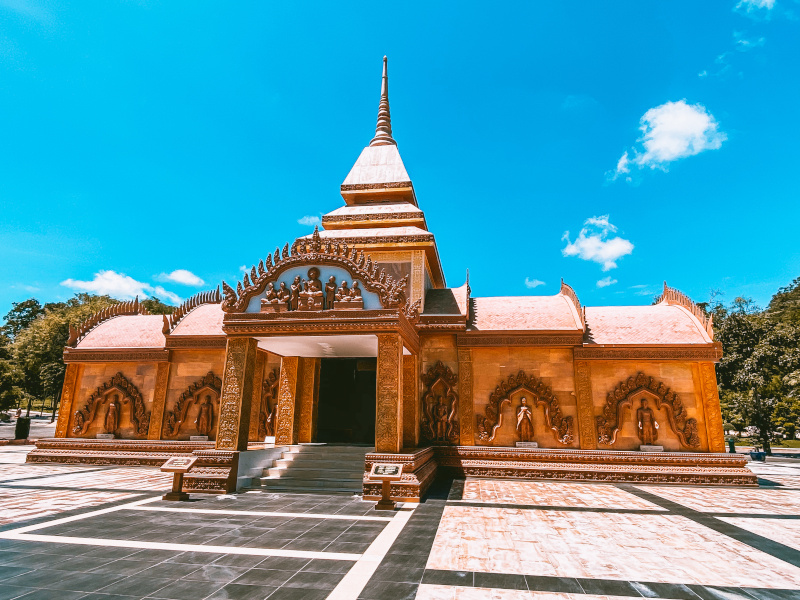
Take a short drive from Kanchanaburi city to discover Wat Tham Pu Wa, a cave temple surrounded by forested hills. Its reddish-brown sandstone entrance has intricate Khmer inspired carvings, while the staircase beyond leads you into chambers filled with Buddha images, sacred shrines and natural stalactites and stalagmites.
You can also explore the surrounding wooded temple grounds. Whether you enjoy photography, Buddhist architecture or exploring natural caves, Wat Tham Pu Wa makes a distinctly different addition to your Kanchanaburi itinerary. Read on to discover what to see, how to get there, when to visit and which nearby attractions you can include in your trip.
Guan Im Sutham Temple
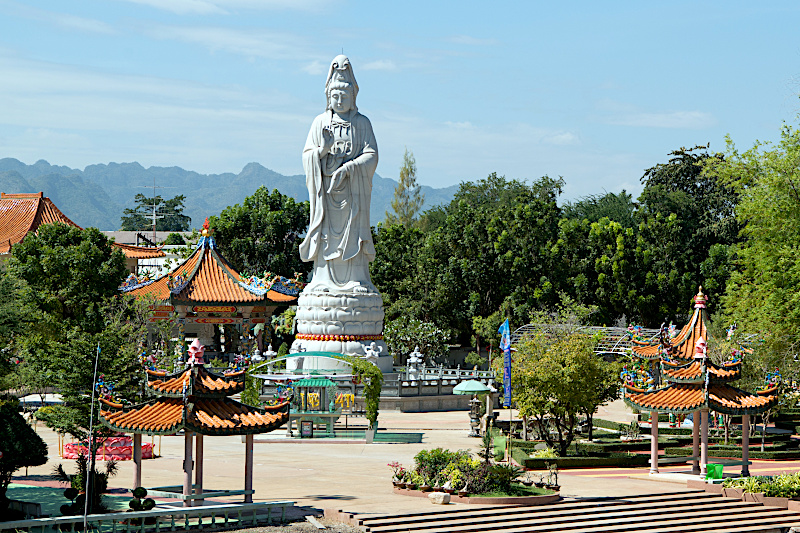
Guan Im Sutham Temple, also known as Wihan Phra Phothisat Kuan Im, makes a worthwhile additional stop when you visit the River Kwai Bridge as part of a Death Railway journey. You can spot its striking 18 metre high white statue of Guan Im overlooking the Khwae Yai River. Within the Chinese Buddhist temple complex, you can explore elaborately decorated halls, view dragon motifs and discover shrines dedicated to Buddhist figures and Chinese deities. The main hall houses three principal Buddha images, while the riverside grounds give you a different view of the famous railway bridge.
You will find the temple immediately across the river from River Kwae Bridge railway station and the main tourist area. To get there from the station end, walk across the railway bridge to the opposite bank, then look for the steps and access path on your right leading towards the temple. Allow approximately 10 to 15 minutes for the walk, with extra time if you stop for photographs. Be careful to follow staff instructions and keep clear of approaching trains when crossing the bridge.
The temple’s visiting hours are usually 7:30 am to 5:30 pm daily, and with free admission. Allow around 30 to 45 minutes to explore the halls, view the Guan Im statue and enjoy the river views. Wear clothing covering your shoulders and knees, and remove your shoes wherever indicated before entering worship spaces. To get there, take a taxi or tuk-tuk from Kanchanaburi city, it's a short trip. If you are combining your visit with a Death Railway train ride, then you need to arrive at the River Kwai station well before the departure time to give you plenty of time to visit the temple and surrounding tourist spots. The train services from Bangkok do not allow sufficient stop time to visit the temple, and organised tours may not have a temple visit in its itinery.
See the Bridge Over the River Kwai, Death Railway & Hellfire Pass article for train times and map for exact location details.
Skywalk Observation Deck Kanchanaburi
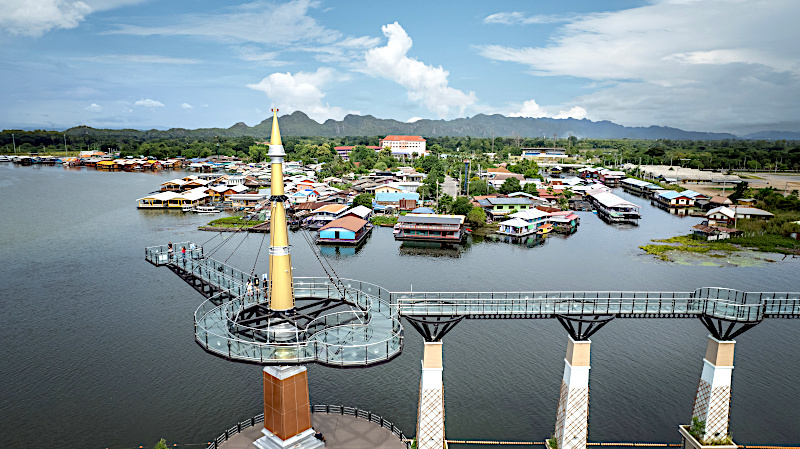
The Kanchanaburi Skywalk Observation Deck has a glass walkway approximately 12 metres above the ground. Its located along Song Kwae Road in the old town’s riverfront area and overlooks the meeting of the Khwae Yai and Khwae Noi rivers which then joins to form the Mae Klong River. As you walk across the transparent floor, you will views of floating raft houses, riverside communities and landmarks across the water.
Allow around 30 to 45 minutes to enjoy the views and take photographs, with an early morning or late afternoon visit giving you a more comfortable alternative to the midday heat. Kanchanaburi Municipality lists opening hours of 8 am to 7 pm daily, with final ticket sales at 6.30 pm and standard admission of 60 baht per person. You will need to wear the protective footwear provided for the glass walkway. On Saturday evenings, the adjoining Song Kwae Walking Street has food stalls, shopping and lively entertainment to round off your day in Kanchanaburi.
See the interactive map below for exact location.
Wat Ban Tham
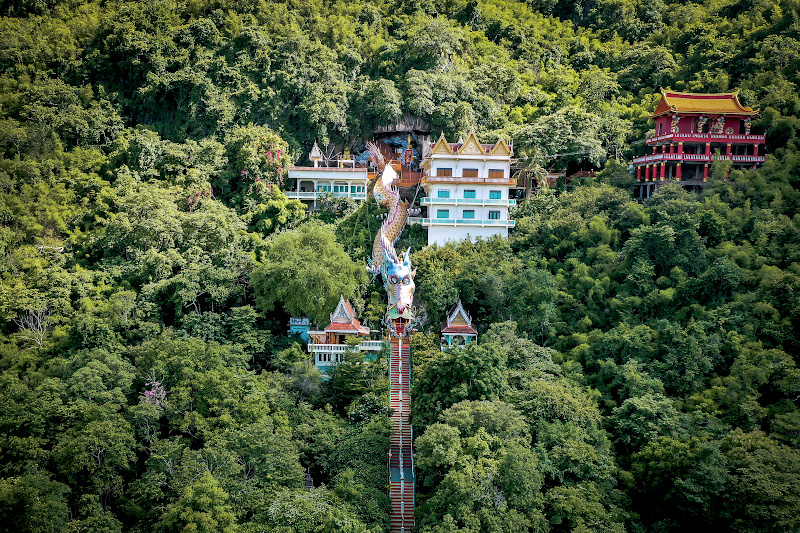
A giant dragon stretching up a limestone hillside gives you a memorable welcome to Wat Ban Tham. Visit in the morning on a clear and bright day so your photos show its vibrant colours. This Buddhist temple is a short drive from Kanchanaburi city and is distinctly different to what you might normally expect. After climbing the long steep steps, you reach the dragons head and follow the passage through its colourful body. Here you reach a spacious cavern where a revered Buddha image and smaller shrines sit beneath the natural rock ceiling. There are murals and stories from Thai folklore along the passage through the dragon’s body depicting the temple’s legends and traditions.
If you enjoy a challenge, you can continue beyond the main sanctuary and follow the steep stairways and rocky paths towards the golden stupa at the summit. The Mae Klong River and surrounding countryside can be seen from the very top of the hillside.
Mueang Sing
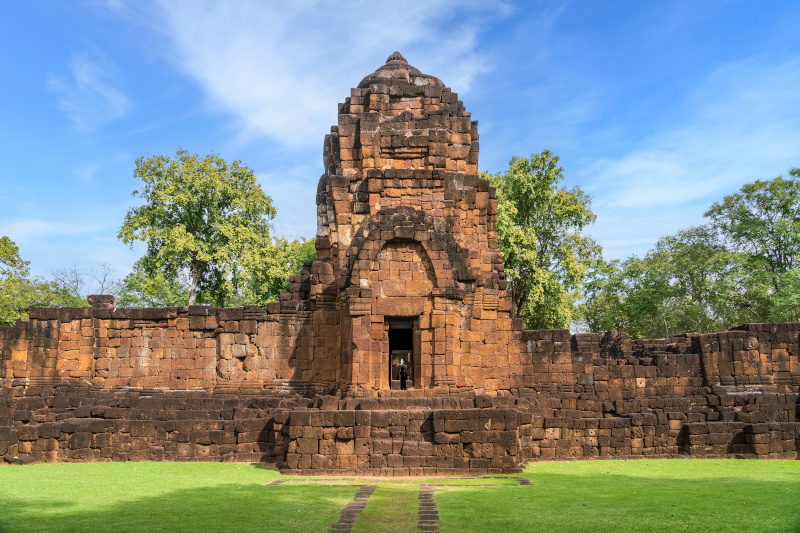
Mueang Sing Historical Park is also known as Prasat Mueang Sing. The parks weathered stonework ruins gives you a glimpse into Kanchanaburi’s ancient past beside the Khwae Noi River. Its reddish-brown laterite sanctuaries, stone gateways and surviving city walls reflect Khmer architectural influence. The main temple is dated to the late 12th or early 13th century which places its construction around the reign of King Jayavarman VII.
The ruins make an interesting stop on the way to Tham Krasae Cave and the Death Railway viaduct, or as part of a longer trip to Sai Yok Noi Waterfall and Hellfire Pass. It's a 10 km detour from the Highway 323 turn-off, just past the Mallika cultural living history museum that you could also visit. See the directions below.
You can explore the park by walking around the main sanctuary, smaller archaeological remains and sections of the old fortified settlement. Prehistoric burials discovered near the river reveal that people occupied the area approximately 2,000 years ago, long before the temple complex was built. The complex is set among lawns and trees, but a morning visit will give you more comfortable conditions for walking through the exposed areas. Allow around one hour for a leisurely visit.
The location is Mueang Sing Historical Park, Sing Subdistrict, Sai Yok District, Kanchanaburi Province. This park is a 43 kilometer drive from Kanchanaburi city taking roughly 45 to 60 minutes. From the city, follow Highway 323 towards Sai Yok, then take Highway 3455 at the signposted turn-off towards Prasat Mueang Sing (as you pass Mallika cultural living history museum), turn left at the end of 3455, then a short distance into 3599, the local road to the entrance.
See the interactive map below for exact location and attraction number 8 on the downloadable Kanchanaburi Railway & Road Tour Map.
Wat Metta Thamrat
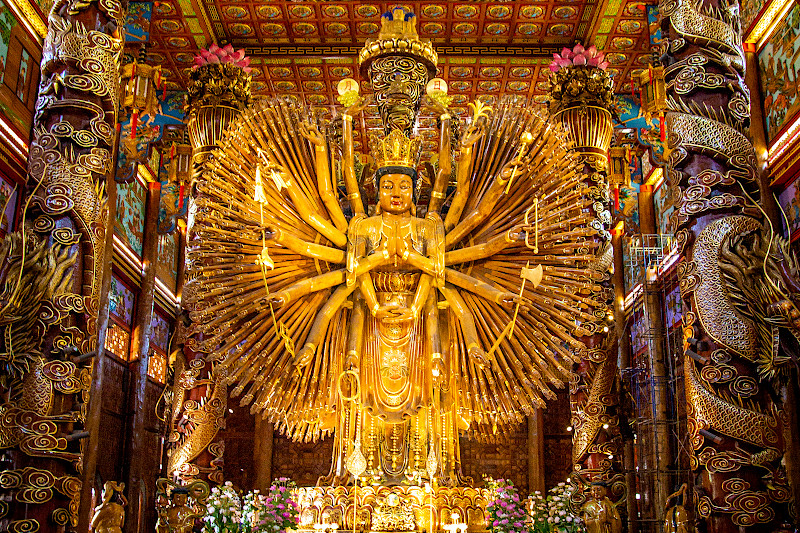
This Chinese Mahayana Buddhist temple sits among the hills outside Kanchanaburi city. Its best known feature is the 12 metre high wooden Guanyin display.
Wat Metta Thamrat is filled with carved wooden figures, dragon-covered columns and an imposing image of Guanyin, the bodhisattva associated with compassion.
The temple is also known as Wat Metta Dharma Bodhiyan or Wat Metta Tham Phothiyan.
With nearby Wat Tham Pu Wa very close-by, you can combine the two temples into a half-day outing.
Saphan Mon Bridge
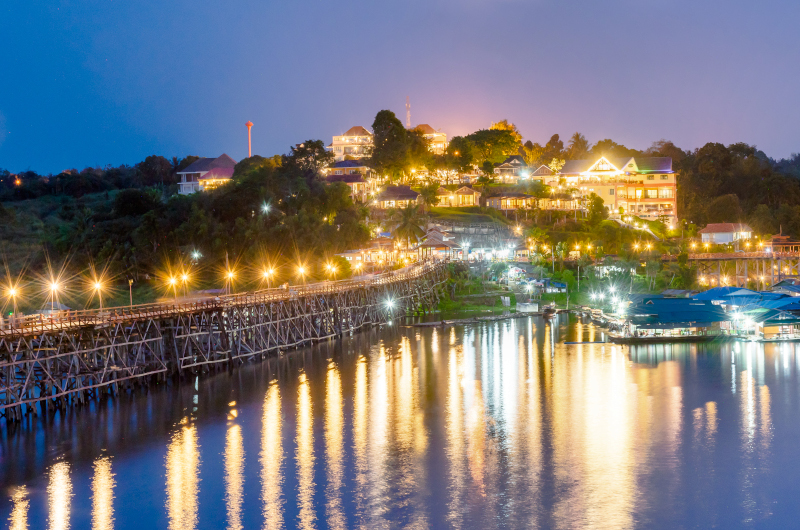
Saphan Mon Bridge is a hand-built wooden footbridge in Sangkhla Buri located about 220 km and four hours drive north-west of Kanchanaburi city. An overnight stay and early wake-up before dawn to watch the sun rise over the lake is the best way to appreciate this immersive experience. It's a fair distance to travel here, so make sure to experience everything this incredible area has to offer.
You can read more on what to expect and how to get there from the link below.
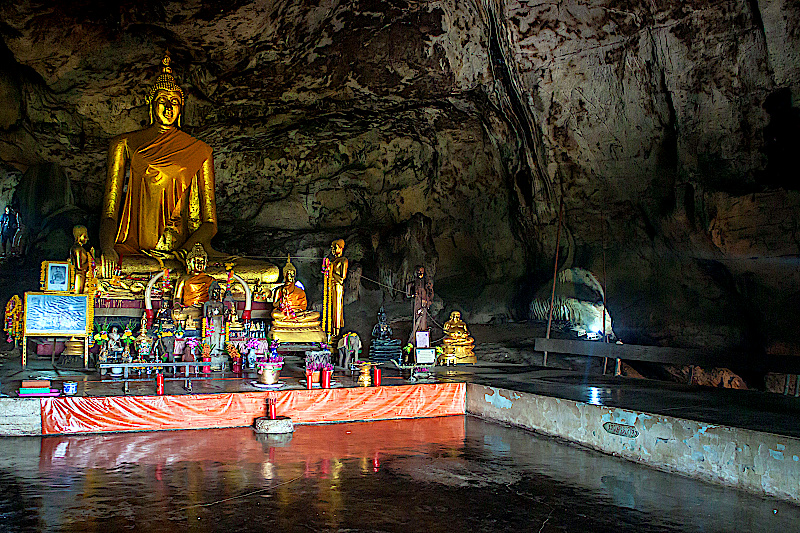
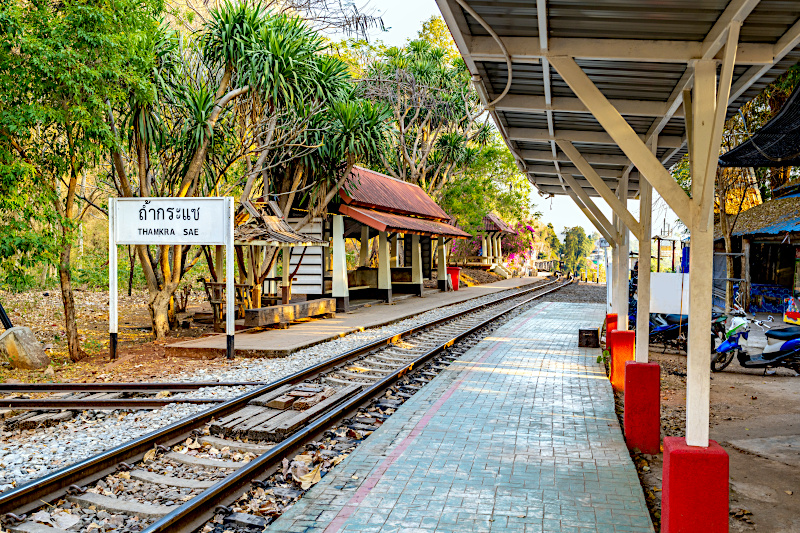
Krasae Cave shrine near ThamKra Sae station
Tucked into the limestone cliffs above the Khwae Noi River, Krasae Cave sits beside the famous wooden Wang Pho viaduct in Sai Yok District about 55km from Kanchanaburi city.
The viaduct clings to the cliff just above, and the station here is called Saphan Tham Krasae. The cave is only a two-minute walk from the station.
The best way to get there is by train from Kanchanaburi station. The most popular option is train 257, leaving Kanchanaburi around 10:30am and reaching Tham Krasae at about 11:40. For the return journey, the 258 train leaves Tham Krasae at about 1:28 pm, reaching Kanchanaburi around 2:43 pm.
You can call the SRT hotline on 1690 or check at the station before you go.
You don’t have to turn back at Tham Krasae. From there you can continue on to Nam Tok which is the end of the ordinary train line. Sai Yok Noi waterfall is a short way from the station. You will need to plan the journey and time with the available trains. Hellfire Pass is about 18 km beyond Nam Tok on the disused section of the line, reachable by taxi or songtaew. On weekends and public holidays, an excursion train from Bangkok also runs on to Nam Tok Sai Yok Noi.
Inside the cave, you should expect something small, simple and sacred. There’s a large Buddha image in the main chamber and other surrounding smaller statues. The cave is cool inside and most visitors are locals there to pray. It’s free to enter and remains an active place of worship. You can also make a donation, but this is optional. Dress modestly, remove your shoes before entering, speak quietly, and be respectful of worshippers by not standing in front of them or using flash photography when close-by. The cave is usually open between 08:00am to 05:00pm daily. Outside, you can walk the tracks for river views and photos of the trestle, but stay alert for passing trains. There are also small restaurants and souvenir stalls near the station.
You should expect to stay for about 2 hours at Tham Krasae, which fits neatly between the 11:40am arrival and the 1:28pm return train. Wear sturdy walking shoes, bring water, a hat and sunscreen, and carry plenty of small change for the fare, donations, snacks and souvenirs.
Be aware that return services are limited, so check the last train before you leave and set your mobile phone alarm as a precaution. Don’t expect to find transport back if you miss it.
See the Kanchanaburi railway and Road tour map (6 & 7 on the map) for the location and the interactive map link below.
How To Get To Kanchanaburi From Bangkok
Kanchanaburi is about 130 km west of Bangkok, and the choice is simple. Take a 100 baht local train for the experience, or a bus or minivan for speed and frequency.
See the Bangkok Transport Hubs article for more information on where to catch transport to other destinations around Thailand.
| Option | Price (per person) | Journey time |
|---|---|---|
| Local train (Nos. 257 and 259) | ฿100 for foreigners | About 2 h 45 min to 3 h |
| Departs Thonburi station at 07:45 and 13:55 daily. Third class with fans only. | ||
| Weekend excursion train (No. 909) | ฿120 return (fan) or ฿240 return (air-con) | About 3 h to the bridge |
| Departs Hua Lamphong at 06:30 on Saturdays, Sundays and holidays. Often sells out. | ||
| Intercity bus | About ฿110 at the terminal, ฿140 to ฿180 online | 2 to 3 h |
| Departs the Southern Bus Terminal (Sai Tai Mai), with services from about 05:00 to 22:30. Air-conditioned. | ||
| Minivan | ฿120 to ฿240 at the terminal, ฿170 to ฿350 online | 3 to 3.5 h |
| Departs the Mo Chit van terminal and other points. Operators include Win Happy, Monsiri Travel and TravelBusAsia. | ||
| Tourist minibus | ฿350 to ฿490 | 2 to 3.5 h |
| Departs the Khao San Road area. Some drop you at the River Kwai Bridge or your guesthouse. | ||
| Private car or taxi | ฿2,500 to ฿2,800 per car | About 2 h |
| Door to door from your Bangkok hotel. Suits families, groups and big luggage. | ||
| Guided day tour | About US$60 per adult | 10 to 11 h round trip |
| Hotel pick-up or a central meeting point. Entrance fees may not be included, so check. | ||
By Train
The train to Kanchanaburi stops at the city station where you will want to get off and take a taxi to your accommodation. It then follows the old Death Railway route, crosses the Bridge on the River Kwai and carries on to Nam Tok where it terminates. It's not a modern service, and here is no overnight train and no regular air-conditioned train on this line.
Two ordinary trains a day leave from Thonburi station in Bangkok, on the west bank of the Chao Phraya River. This is not Bangkok's older Hua Lamphong station and not the big new Krung Thep Aphiwat terminal, which is a common mix-up. Thonburi is about a 750 m walk from Bang Khun Non MRT station (Blue Line), or you can take a Chao Phraya Express boat to the Thonburi railway pier. See the Bangkok Transport Map and Chao Phraya River Piers Map for transport routes.
Local Daily Train
Third class only, with ceiling fans, open windows and hard seats. There is no air-conditioning and no buffet car, but there are toilets and vendors walk the aisles selling snacks, fruit and drinks.
Fares for foreigners are a flat ฿100 for any distance on this line (fares may have increased), including the full run to Nam Tok. Thai citizens pay ฿25.
Seats are unreserved, so you can sit anywhere.
Tickets are sold at the station window on the day only, and the trains don't sell out because most people take air-conditioned buses during the week.
It takes about 2 hours and 45 minutes to reach Kanchanaburi station, then roughly 7 to 15 minutes more to the River Kwai Bridge. Delays of 20 to 40 minutes are common.
Weekend Excursion Train
On Saturdays, Sundays and public holidays, a special tourist train (No. 909) leaves Bangkok's old Hua Lamphong central station at 06:30. See the Bangkok Transport Map for exact location.
It stops for about half an hour at the River Kwai bridge, continues to Nam Tok and returns to Bangkok the same evening.
Fares are ฿120 return in a fan-cooled third-class coach, or ฿240 return in air-conditioned second class.
It often sells out, so book ahead, and it does not run during Thai New Year Songkran festival in April.
Times are approximate. Trains often run late, so arrive early and don't plan tight connections. Always verify routes and times before you leave.
| Train | Thonburi | Kanchanaburi | River Kwai Bridge | Nam Tok |
|---|---|---|---|---|
| No. 257 (morning, out) | 07:45 | About 10:30 | About 10:37 | About 12:05 to 12:35 |
| Best choice for a day trip, because the last train home leaves Kanchanaburi at 14:43. | ||||
| No. 259 (afternoon, out) | 13:55 | About 16:21 | About 16:28 | About 18:15 to 18:30 |
| Plan an overnight stay if you ride on to Nam Tok. | ||||
| No. 260 (early, back) | Arrives 09:35 | Departs 07:05 | Departs 06:59 | Departs 05:20 |
| Early train back to Bangkok. | ||||
| No. 258 (afternoon, back) | Arrives 17:40 | Departs 14:43 | Departs 14:34 | Departs about 13:00 |
| The last train that reaches Bangkok. After this, take a bus or minivan. | ||||
A third train, No. 486, leaves Nam Tok at about 15:30 but stops at Kanchanaburi and does not continue to Bangkok. The last train that gets you back to Bangkok leaves Kanchanaburi at 14:43. After that, take a bus or minivan.
By bus and minivan
Road transport is the practical choice if you want more departures, air-conditioning, or a faster trip. All of these arrive in Kanchanaburi town, usually at the bus terminal in the centre. The River Kwai Bridge is about 3 km north of the War Cemetery area, so you'll need a songthaew, Grab or tuk-tuk from the terminal.
Intercity bus from the Southern Bus Terminal
Air-conditioned buses leave the Southern Bus Terminal (Sai Tai Mai, in Taling Chan on the western edge of Bangkok) throughout the day, with services running from about 05:00 to 22:30. Walk-up fares are around ฿110 to ฿115, and the trip takes about 2 to 3 hours depending on traffic. Online listings for intercity buses (for example Kanchanaburi Express) show fares of ฿140 to ฿180, which include a booking fee. No reservation is needed for the terminal buses. See the Bangkok Transport Hubs article for information on the Southern Bus Terminal.
Minivans from Mo Chit
Minivans leave from the Mo Chit van terminal (Mo Chit 2) and a few other points. Expect ฿120 to ฿240 when buying at the terminal and ฿170 to ฿350 online. Journey time is typically 3 to 3.5 hours. Operators you'll see listed include Win Happy, Monsiri Travel and TravelBusAsia.
See the Bangkok Transport Hubs article for information on Mo Chit station.
Tourist minibus from Khao San Road
Small operators run minibuses from the Khao San area, usually a few times a day. Fares are about ฿350 to ฿490 and the trip takes 2 to 3.5 hours. The advantage is that some drop you at the River Kwai Bridge or your riverside guesthouse rather than at the terminal.
Return Journey
Intercity buses from Kanchanaburi to Bangkok run from the early morning to about 19:45, and minivans run on a thinner schedule. This makes a bus the easy way home if you take the morning train out.
By car, taxi or tour
Private car
A pre-booked private car costs about ฿2,500 to ฿2,800 per sedan one way, door to door, which makes for a convenient and very comfortable ride. It takes about two hours from your central Bangkok hotel. The new M81 motorway from Bang Yai to Kanchanaburi, opened in late 2025, and has charged car tolls of ฿45 to ฿150 since January 2026, which are usually included in pre-booked fares. A car suits families, groups and anyone with a lot of luggage. Your accommodation in Bangkok can usually arrange a private car. Prices may be more if the driver cannot find some-one for a return jouney.
Guided day tours
Day tours from Bangkok typically take 10 to 11 hours, start around 06:00am to 08:00am with a hotel pick-up or a central meeting point, and combine the bridge, the war cemetery and a short ride on the Death Railway. Expect to pay about US$60 per adult for a full-day tour with a guide. Check if entrance fees are included. You see the highlights with no planning, but the train ride on any guided tour is usually short, around 40 to 50 minutes.
If you want to visit Erawan Falls or Hellfire Pass, pick a tour or private car that covers them, because public transport to both is limited.
How To Book
Online platforms add a booking fee, so a ticket costs more than at the terminal in exchange for a confirmed seat. For all trains, you can call the State Railway of Thailand on 1690 to confirm the day's service.
| Option | How to buy | Advance booking needed? |
|---|---|---|
| Daily local train | Ticket window at Thonburi station, on the day | No |
| No reserved seats and the trains don't sell out. At unmanned stations you can buy on board. | ||
| Weekend excursion train | SRT's D-Ticket website or a railway station ticket office | Yes |
| Sells out early, especially around Thai holidays. Tickets can be cancelled and refunded. | ||
| Intercity bus | Walk up at the Southern Bus Terminal, or book online | Not for terminal buses |
| Online through 12Go, Bookaway or Omio gives a fixed seat. Online fares include a booking fee. | ||
| Minivan | Terminal counters, or online | Helpful at busy times |
| Online through 12Go, Bookaway or Baolau. | ||
| Private car | Online at a fixed price, for example through 12Go. | Yes |
| Fixed fare and pick-up. Motorway tolls are usually included. | ||
| Day tour | Online through Expedia, Trip.com, Trazy or Ticket2Attraction | Yes |
| Many tours offer free cancellation. | ||


