
WAT BAN THAM DRAGON TEMPLE
Wat Ban Tham in Kanchanaburi: Dragon Temple, Cave Shrines and Hilltop Views
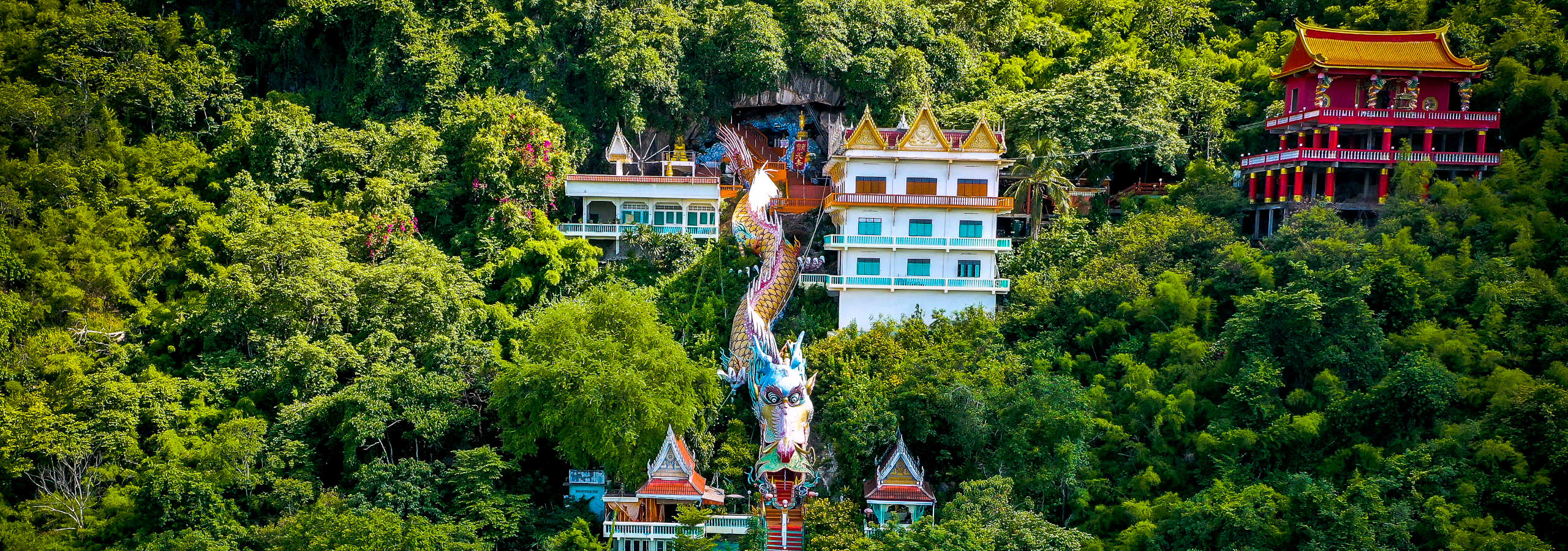
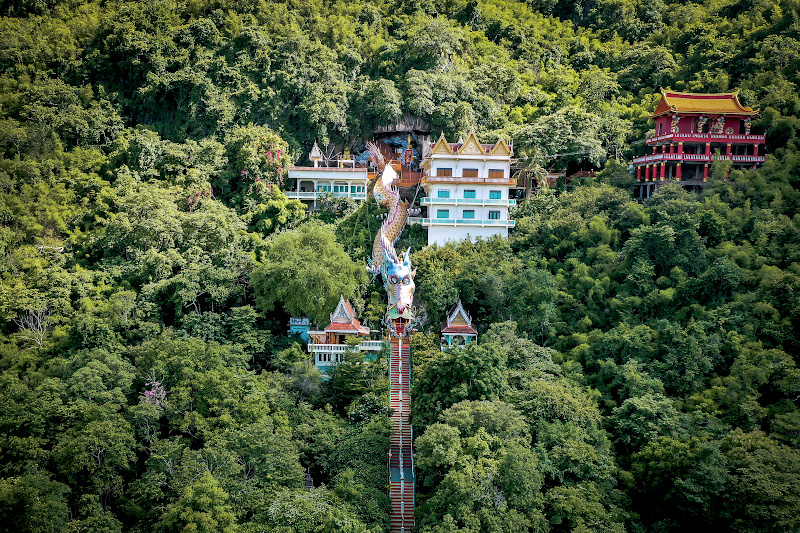
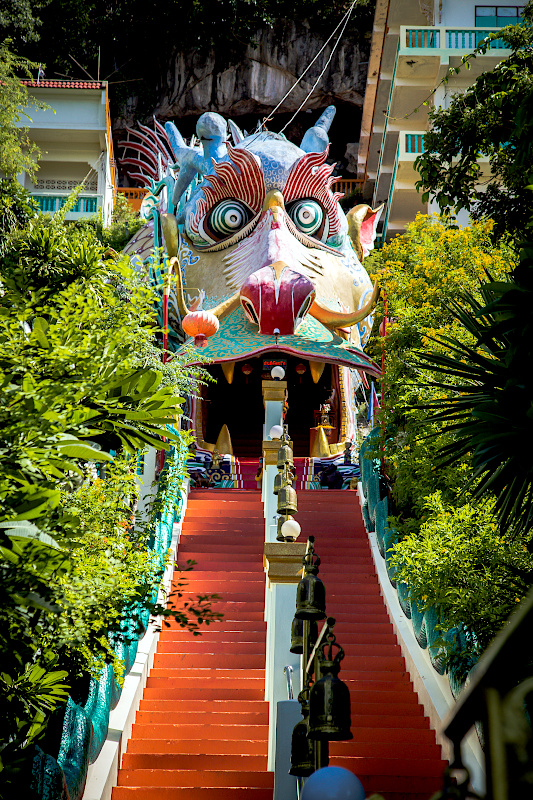
Wat Ban Tham is one of Kanchanaburi’s most distinctive cave temples, recognised by the enormous dragon forming part of its hillside staircase. The route passes through the dragon’s open mouth and painted interior before reaching a natural cavern containing Buddhist shrines. Farther up the hill, a golden chedi overlooks the Mae Klong River and surrounding countryside.
Situated in Khao Noi in the Tha Muang district which is south of Kanchanaburi city, this temple combines Buddhist religious heritage, local folklore and a very long climb to the cave entrance. You can just visit the dragon passage and main cave, or also include the more demanding higher paths if you are comfortable with steep stairs and uneven ground.
Wat Ban Tham Dragon Temple
Exploring Wat Ban Tham
Dragon staircase
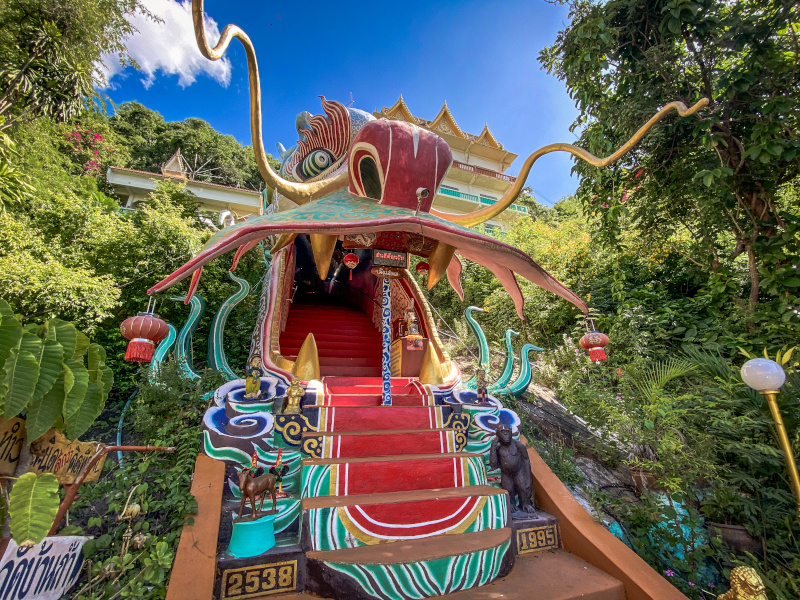
Start the climb from carpark level up the decorative staircase climbing towards the dragon’s open mouth. There are 269 steps along the route up to the main cave which makes this a challenging climb even without continuing to the summit.
Inside the dragon there are stairs which pass through an enclosed passage decorated with murals. These include scenes associated with the temple’s history and the Thai literary tale Khun Chang Khun Phaen.
Main cave and Buddha shrine
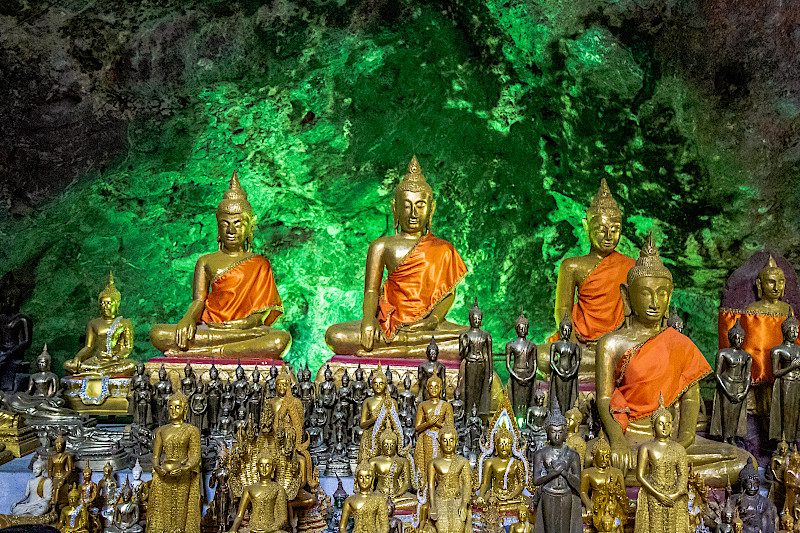
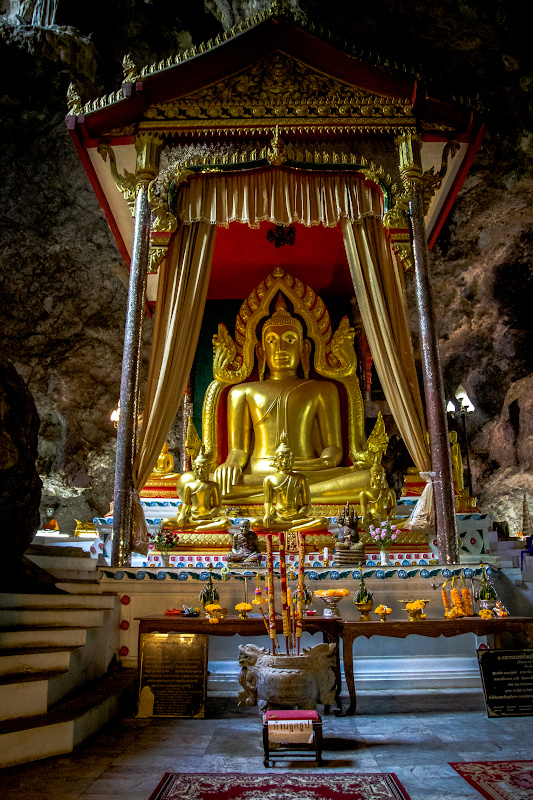
The main cavern is known as Tham Khuha Mangkon Sawan which translates as the Heavenly Dragon Cave. Its main religious feature is Luang Pho Yai Chinnarat, a revered seated Buddha image surrounded by shrines and natural rock formations. Openings in the limestone allow daylight into the cavern.
A formation resembling a woman is linked in local tradition to Nang Bua Khli, a character from Khun Chang Khun Phaen. This forms part of the temple’s folklore. The cave remains a place of worship, and visitors should allow space for those making offerings or praying.
Upper caves and summit
Above the main cave is a steep metal staircase leading towards the higher hillside paths. The route has some uneven steps and rocky sections. There is another cave called Tham Man Wichit that contains stalactites and a shrine associated with a hermit figure, but access to may be limited.
The complete ascent to the summit is roughly 700 steps or more, including the lower section. A golden chedi stands at the summit that has broad views across the river and countryside. Be careful when descending on your return, particularly after rain. Wearing flat healed shoes with non-slip tread would be a good idea.
How To Get To Wat Ban Tham Dragon Temple from Kanchanaburi
Wat Ban Tham is approximately 10 to 15 kilometres from central Kanchanaburi, depending on the starting point and route. A car journey normally takes around 20 to 30 minutes.
The usual route is taking Sangchuto Road south, then turning towards Mae Nam Mae Klong Road. After crossing the river, a left turn leads onto the riverside road route 3429. The temple is on the right after approximately six kilometres. Navigation should be set to Wat Ban Tham, Khao Noi, Tha Muang, to distinguish it from similarly named temples elsewhere. See the interactive map below for exact location.
Hotels and guesthouses can arrange drivers, while songthaews can also be sought at the bus terminal or railway station. Taking a half or full day organised tour group outing would be the easiest and stress-free option if you want to see several attractions in one day.
|
Transport |
Approximate journey each way |
Approximate price |
|---|---|---|
|
Shared songthaew |
25 to 40 minutes |
Around 700 baht return per vehicle, including one hour at the temple. Longer waiting time should be negotiated. |
|
Private car with driver |
20 to 30 minutes |
Combination tours, for example to Wat Ban Tham, Wat Tham Suea and the Giant Rain Tree, normally start from 1,700 baht per car, for up to three passengers. |
|
Self-drive hire car |
20 to 30 minutes |
Selected cars are advertised locally at approximately 1,000–1,200 baht per day for short rentals, plus fuel. |
Opening times and entry fees
Opening hours are usually 7.30 am to 5 pm, with free admission. Visitor listings also show these hours daily. Donations are welcome, and small notes are useful for voluntary contributions and offerings. If you are attempting the full hilltop climb then arrive with sufficient time for both the ascent and descent well before closing time.
How long to spend at Wat Ban Tham
Suggested visiting times are:
- 45 to 60 minutes for the dragon staircase, main cave and photographs.
- 1½ to 2 hours for a visit including the upper route and hilltop chedi.
- Up to 2½ hours for a slower pace with frequent breaks.
Heat, path conditions and individual walking speed can affect these estimates.
Is Parking available?
Parking is available in the lower temple grounds and is usually free. The temple entry stairs are a short walk through a side alley.
What to wear and bring
Appropriate temple clothing should cover the shoulders and knees. Lightweight trousers, a loose shirt or a long skirt allowing comfortable movement is a good choice. Supportive walking shoes with good tread is the safe option for the climb, but shoes should be removed wherever temple signs or staff indicate.
Drinking water, a hat, sunscreen and a small amount of cash are useful. Insect repellent would also be a good idea. A compact torch can help in dim sections of the cave route.
Best time to visit
November to early February generally provides the most comfortable weather for climbing, with comparatively cooler temperatures and less humidity and rainfall. The wetter months of May to October bring greener surroundings and give you nice panoramic photos, but the rain can limit visiting times.
If you arrival around 8am to 9am, this allows time to explore before the strongest daytime heat. Morning visits are particularly suitable for reaching the summit. Late afternoon visits require enough time for a safe descent before closing. After heavy rain, conditions on the upper paths can make the walk to the summit slippery.
Nearby facilities
Parking, food and drinks are concentrated around the lower temple grounds only. Asking about the nearest toilets before starting the long climb would be a good idea.


