
WAT THAM PU WA
Wat Tham Pu Wa Cave Temple and Peaceful Forest Surroundings: What to See and How to Visit
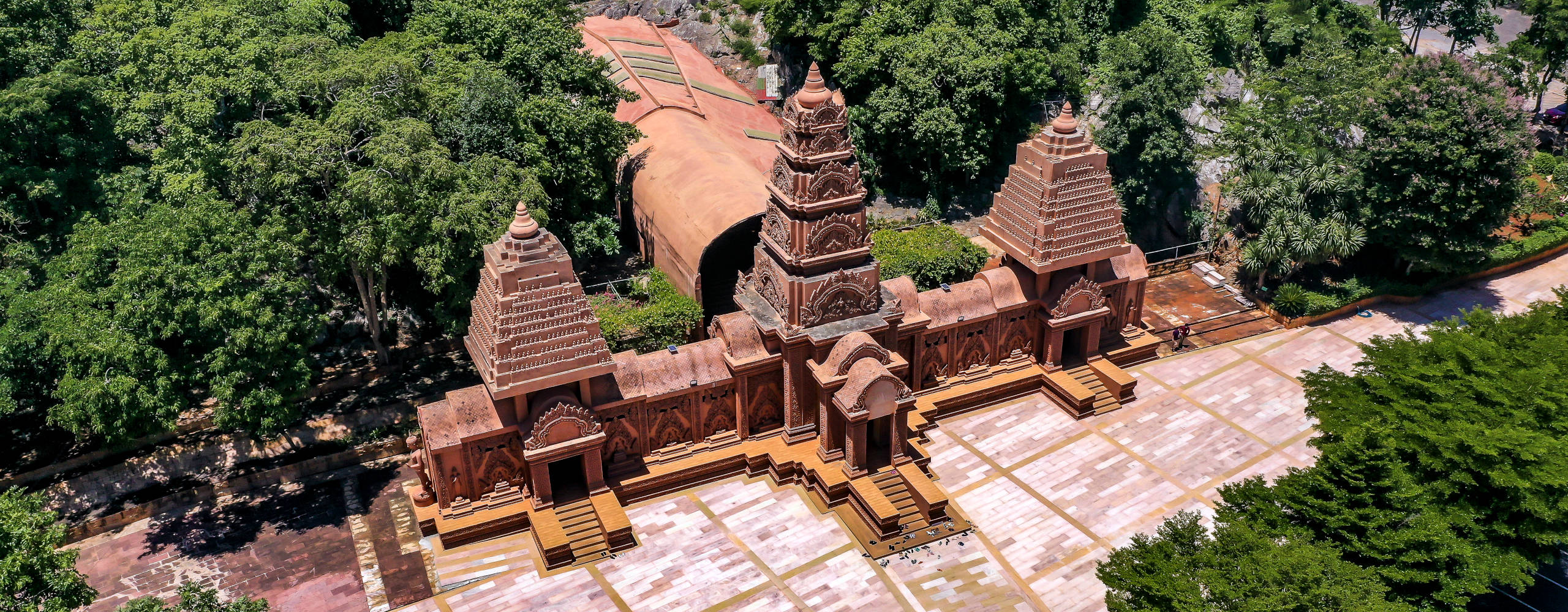
At Wat Tham Pu Wa, you can admire an intricately carved sandstone temple before descending into a natural cave filled with Buddhist shrines. This temple is set among wooded hills in Kanchanaburi province. It has striking architecture, limestone cave formations and spaces used for meditation.
Your visit takes you from the reddish-brown entrance building into chambers where Buddha images stand among stalactites and stalagmites. Outside, you can also explore the public temple grounds and enjoy the surrounding lush forest. This attraction can comfortably be included in a half-day trip.
See below for more information on how to get there, what to expect, and when to go. There is an interactive map showing the exact location, and a link to the tour map of the local area and the routes to get there from Kanchanaburi city.
How to explore the temple cave and forest surroundings, and what to expect.
The Sandstone Prasat
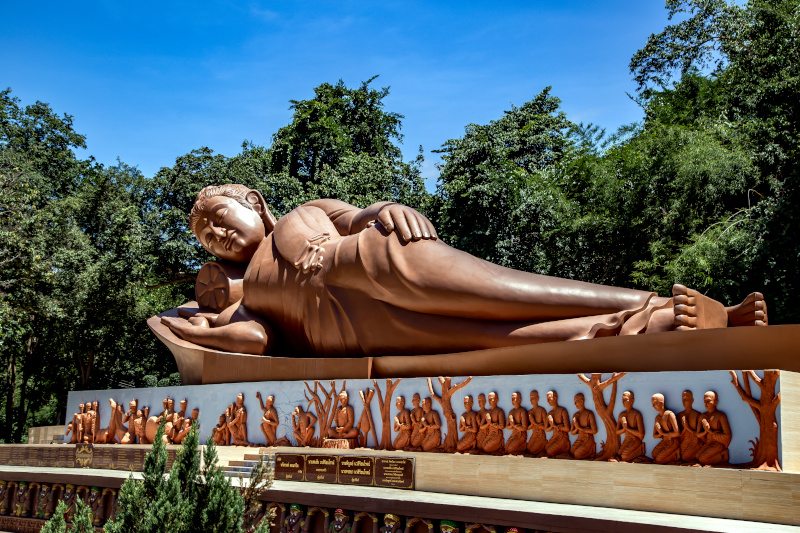
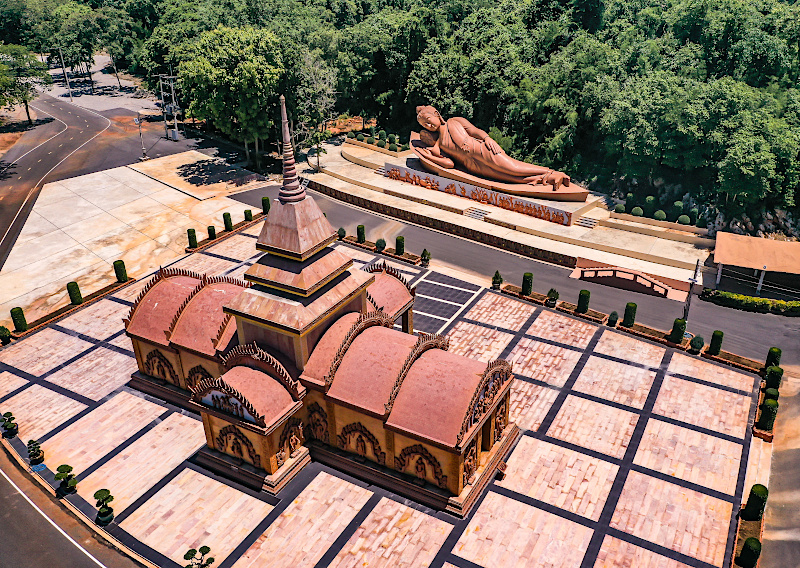
Start the tour by exploring the freestanding sandstone Prasat in the open courtyard which has a central spire and large reclining Buddha behind. You will need to check with temple staff whether its interior is open to visitors. It's not a large building and will only take a short time to view.
The Khmer inspired entrance building and cave sanctuary
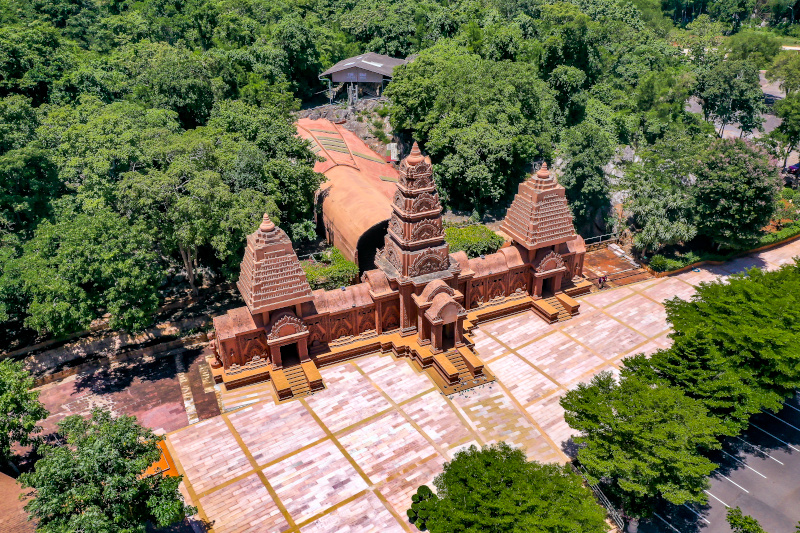
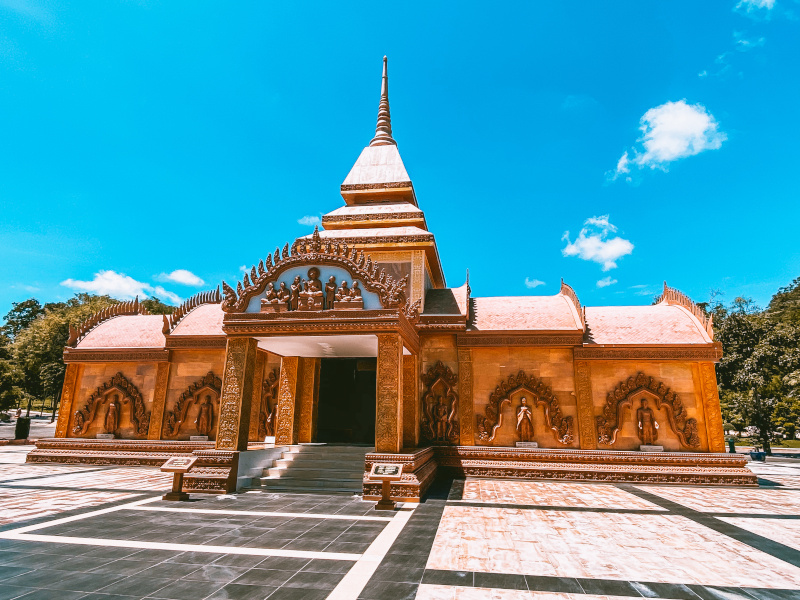
The main attraction is the Khmer inspired entrance building and cave sanctuary. This is a later addition to the complex, not an ancient Khmer ruin, but is still a very impressive structure. This sandstone building stands against the wooded hillside, with three prominent towers rising above an intricately decorated façade.
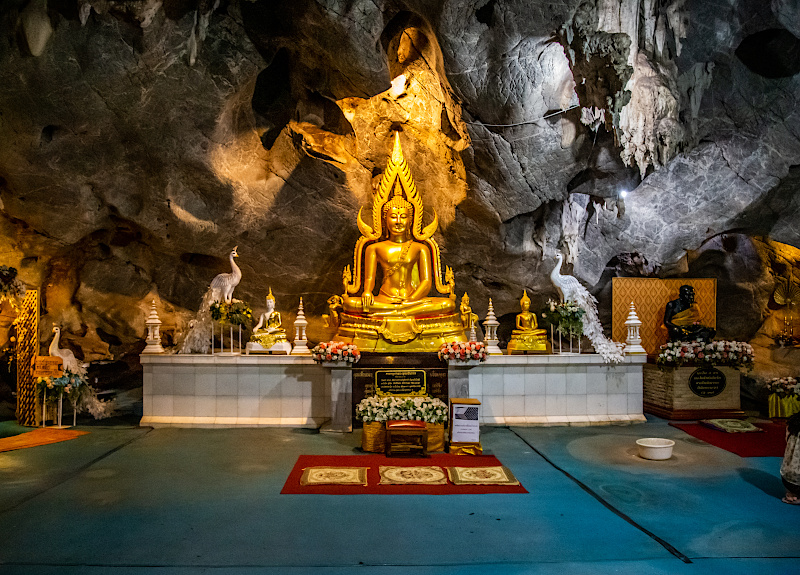
Descend into the cave chambers by following the visitor route down into the cave. There are two levels to explore, with several chambers in the lower section.
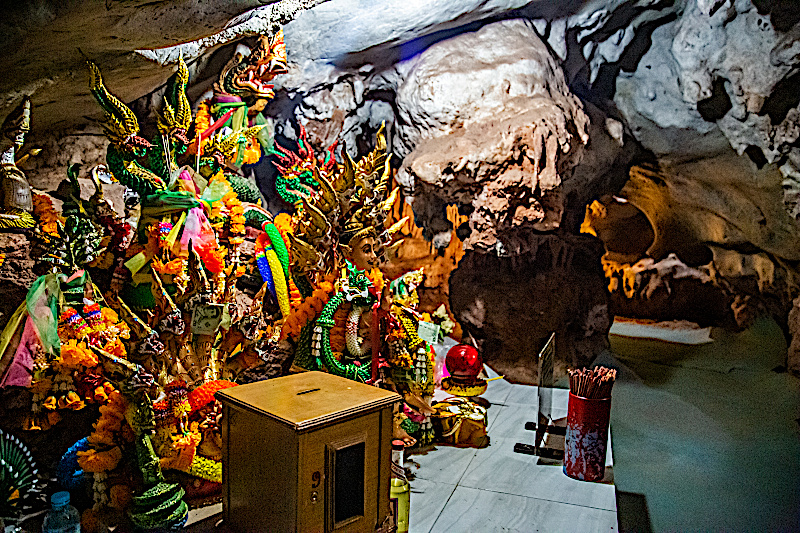
You will see Buddha images and smaller shrines standing among stalactites and stalagmites. There are natural openings allowing daylight into parts of the cave which add to the mystical atmosphere. If you are taking photos, then don't use a strong flash as it will wash out the contrasting colours. A wide aperture and slower shutter speed will take a better image, but you will need to steady your camera against something solid.
The temple grounds and forest surroundings
If you have time after exploring the cave, spend time in the public grounds. Here, you can see the large seated Buddha and views of the surrounding wooded hills.
Keep to the pathways and respect residential and meditation areas. If you want to explore beyond the main grounds, please ask temple staff about permitted routes. The surrounding forest is marked with public walking trails.
What To Know Before Visiting Wat Tham Pu Wa
Opening times and entry fees
The temple’s published visiting hours are 8 am to 6 pm daily, and admission is free. You can make a voluntary donation if you wish. Arrive well before closing so you have time to explore without rushing.
As you are visiting an active temple, ceremonies or maintenance may affect access to individual areas. Check locally before making a special journey, particularly if you need assistance or want to arrange a meditation visit.
How long should you spend there?
Allow 60 to 90 minutes for the entrance building, cave shrines and a short walk around the public grounds. If you enjoy photography or want time to sit quietly, allow up to two hours.
For a relaxed outing from Kanchanaburi, set aside three to four hours, including return travel and a visit to nearby Wat Metta Tham Photiyan.
Is parking available, and is the temple accessible?
You can park within the temple grounds, and there is spacious parking areas.
Although you can drive to the temple complex, there are stairs when entering and moving through the cave. Check access in advance if you use a wheelchair or have difficulty with steps. You may still be able to enjoy the exterior architecture and accessible parts of the grounds.
When is the best time to visit?
For more comfortable outdoor sightseeing, aim for November to February, when this part of Thailand generally has cooler, drier weather. March to May can be very hot, while the rainy season, broadly May to October, brings greener surroundings and a greater chance of showers.
A morning visit gives you more comfortable conditions for exploring the grounds. If you prefer a quieter experience, try a weekday outside major holidays and religious events.
After rain, take extra care on damp steps and paths.
What should you wear?
Wear clothing that covers your shoulders and knees, with lightweight, breathable fabrics for the heat. Loose trousers, a longer skirt and a modest shirt are good choices.
Choose footwear with a secure grip that you can remove easily. Follow signs or staff instructions about where to take off your shoes before entering sacred areas. Bring a hat for the outdoor grounds and remove it when entering worship spaces.
How To Get To Wat Tham Pu Wa from Kanchanaburi City
By private car, taxi or hired songthaew
Your simplest option is to arrange a car and driver through your accommodation or a local transport operator. Book the return journey and waiting time together, as you should not assume that a taxi will be available outside the temple.
You can also ask about hiring a songthaew, the passenger trucks used locally. For this trip, arrange a private charter and agree on the complete itinerary before leaving. There is no direct public transport service to the temple listed by the local visitor guides consulted.
By rental car or scooter
If you prefer to drive yourself, one approach follows Route 3228, the Kanchanaburi–Ban Kao road, before joining local roads towards the temple. Use navigation for the final approach, as your best route will depend on where you start in Kanchanaburi.
A scooter is an option if you already ride confidently and have the appropriate licence and insurance. A car gives you more protection from the heat and rain.
Approximate transport costs
|
Transport option |
Planning cost |
What to check |
|---|---|---|
|
Private car with driver |
About 1,200–2,000 baht per vehicle for a return visit with waiting |
Confirm pickup, waiting time and additional stops |
|
Small rental car |
About 1,000–1,200 baht per day, plus fuel |
Check insurance, deposit and rental conditions |
|
Rental scooter |
About 250–350 baht per day, plus fuel |
Check the vehicle, helmet and insurance arrangements |
|
Chartered songthaew |
Negotiated fare |
Agree on a return price and waiting time |


