THAILAND FACTS
Facts and Information on Thailand : What to know before you go
Where is Thailand ?
The Kingdom of Thailand sits at the heart of mainland Southeast Asia, with coastlines on both the Andaman Sea to the west and the Gulf of Thailand on the eastern side. It shares land borders with Myanmar, Laos, Cambodia, and Malaysia, which makes it a great “hub” country for overland travel as well as island-hopping and short domestic flights. Thailand’s population today is roughly 71.5 million people. See the Thailand Cities map for more detail.
What Religion is Thailand ?
Culturally, Thailand is often described as a predominantly Theravada Buddhist country, and you’ll see that everywhere, from neighborhood spirit houses and morning alms rounds to glittering temple complexes in every town. Buddhism remains the largest religion by far, while Islam is the second largest, especially in parts of the deep south. The best advice for visitors is to dress modestly in temples, remove shoes when asked, keep voices low in sacred spaces, and treat religious symbols with respect.
See the Buddhism and Temples page for more information.
What is the Capital of Thailand ?
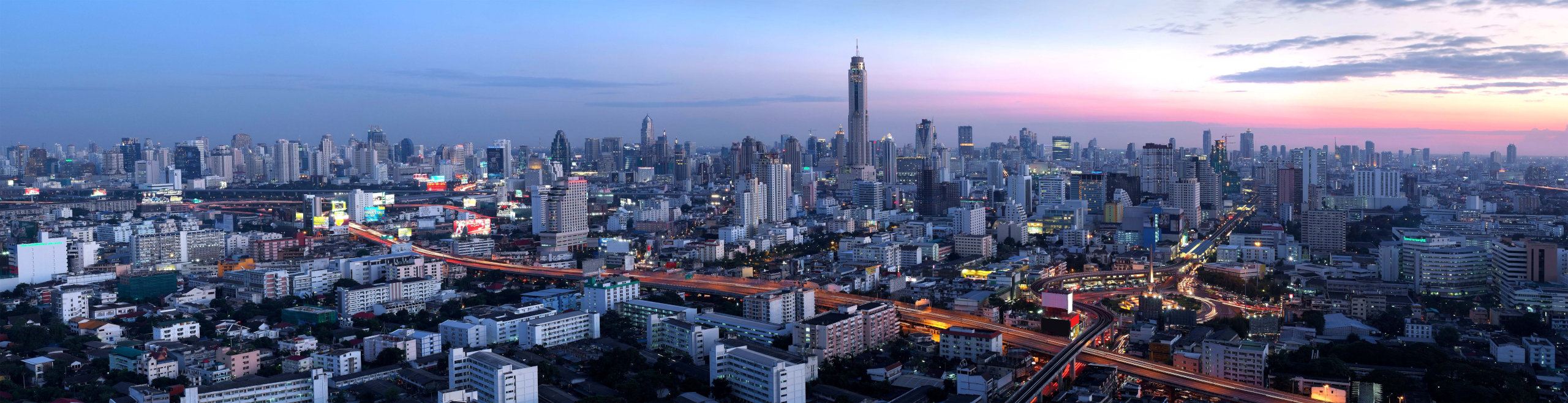
The capital city is known globally as Bangkok, but the official Thai name you’ll often see on signs and formal documents is Krung Thep Maha Nakhon, with many locals just say “Krung Thep”. This is why tickets, maps, and government notices can sometimes look like they’re referring to two different places, but they aren’t. Bangkok is also its own special local administrative area, with its own city governance structure.
Thailand is divided into 76 provinces, plus Bangkok, which has special administrative status. Most provinces share their name with the main city. For example, Chiang Mai province has Chiang Mai city. So when you book transport or accommodation, double-check whether you’re looking at the province or the city center. See the cities of Thailand for more information.
Pattaya isn’t a province; it’s a special local administrative area within Chonburi Province, with its own city administration. This matters for tourists mostly in terms of local rules, city services, and how some addresses are formatted in bookings and ride apps.
What Money does Thailand use ?
Money in Thailand is straightforward. The currency is the Thai baht (THB) which is usually written with the symbol ฿. Common banknotes in everyday use are ฿20, ฿50, ฿100, ฿500, and ฿1,000. Coins you’ll actually see in daily life are typically ฿1, ฿2, ฿5, ฿10, and sometimes 25 and 50 satang. Satang are like cents, 100 satang = 1 baht.
For exchanging money, tourists usually juggle three options: exchanging cash, using ATMs, and paying by card card or mobile phone app. If you bring foreign cash to exchange, note that exchangers prefer clean, undamaged notes, and airports often offer less competitive rates than city exchanges. For peace of mind, banks and reputable exchange booths are the safest choices. One cultural point worth knowing is that Thai notes and coins feature images of Thai royalty, so avoid stepping on money, because it can be seen as disrespectful.
What Measurement Systems does Thailand use ?
Thailand uses the Buddhist Era (B.E.) calendar alongside the western Gregorian calendar. The B.E. year is 543 years ahead of the Western year, so 2026 = B.E. 2569. You will see B.E. dates on receipts, museum labels, official paperwork, and some event posters. In everyday tourist life, you’ll usually see both systems, but it’s useful to recognize B.E.
Timekeeping in Thailand runs on Indochina Time (ICT), UTC+7, and the country does not observe daylight saving time. That means Thailand’s time stays consistent all year, which makes planning flights and tours simpler, especially if you’re hopping between countries that do change clocks. See the time in Thailand relative to your country.
Measurements are officially metric; kilometers, Celsius, kilograms, so distances on road signs are in km and temperatures in °C. You might occasionally encounter older Thai units in niche contexts like land sizes or at traditional markets. When you shop, you’ll also notice that prices are often rounded to convenient coin amounts. See the Thailand travel tips for advice on planning a Thailand vaction.
What Language does Thailand use ?
Thai is the national language, and English is widely taught in schools, so you’ll find plenty of English in airports, major attractions, hotels, and tourist neighborhoods. Outside big tourist zones, English ability varies, often better with younger people. Having a translation app on your mobile cell phone, a saved hotel address in Thai, and a few polite phrases goes a long way. A simple “sawasdee” (hello) and “khop khun” (thank you) can instantly soften interactions and earn smiles. See the travel apps for Thailand and the handy Thai language words and phrases to make your vacation easier.
What is the Weather like in Thailand ?
Thailand’s weather is a major part of the travel experience, and it changes by region. Broadly, many areas follow a hot season (roughly Mar–May), a rainy/monsoon season (roughly May–Oct), and a cooler, drier period (roughly Nov–Feb), but islands and coasts can follow different rainfall peaks. Expect high humidity much of the year, intense sun between rain showers, and occasional heavy downpours that can flood streets quickly. If you’re heading north in the late dry season, be aware of potential smog/haze days; if you’re going south, remember the Andaman and Gulf coasts can have different monsoon timing, which affects sea conditions and boat trips. See Thailand weather for more information and current city temperatures.

Self Tours
See the guides on some easy self tours around Bangkok. Don't miss out on some "must see" places and hidden gems. Discover how to get around and where to visit.

Bangkok Maps
View and download your free Bangkok maps. A colorful and easy to read map for getting around the streets. Get the Bangkok skytrain and river boat piers map.

Tour Guide Maps
Get all the Bangkok touring maps showing streets, transport, hotels and tourist spots. You can view and download these colorful and easy to read guides for free.